
How to Degrease a Screen for Screen Printing | Screen Making 101


To produce a durable, high-quality stencil, you need to start with properly prepared mesh. Grease, oil, dirt and other contaminants can interfere with emulsion or capillary film adhesion, leading to coating problems, pinholes and premature stencil breakdown.
Chromaline’s Integrated Screen Chemistry (iSC) line includes several degreasing options designed to help prepare screens for consistent stencil making. But before choosing a degreaser, it is important to understand why degreasing is an essential part of the screen-making process.
Why You Should Degrease Every Screen
Screens should be degreased before applying emulsion or capillary film, whether you are working with brand-new mesh or a screen that has just been reclaimed.
Even a screen that looks clean can contain oils, dust or residue that affect how evenly the stencil adheres to the mesh. Proper degreasing helps create a clean, uniform surface for coating and can improve stencil adhesion, resolution and durability.
How to Degrease a Screen in Four Simple Steps
- Wet both sides of the screen.
- Apply the appropriate screen degreaser.
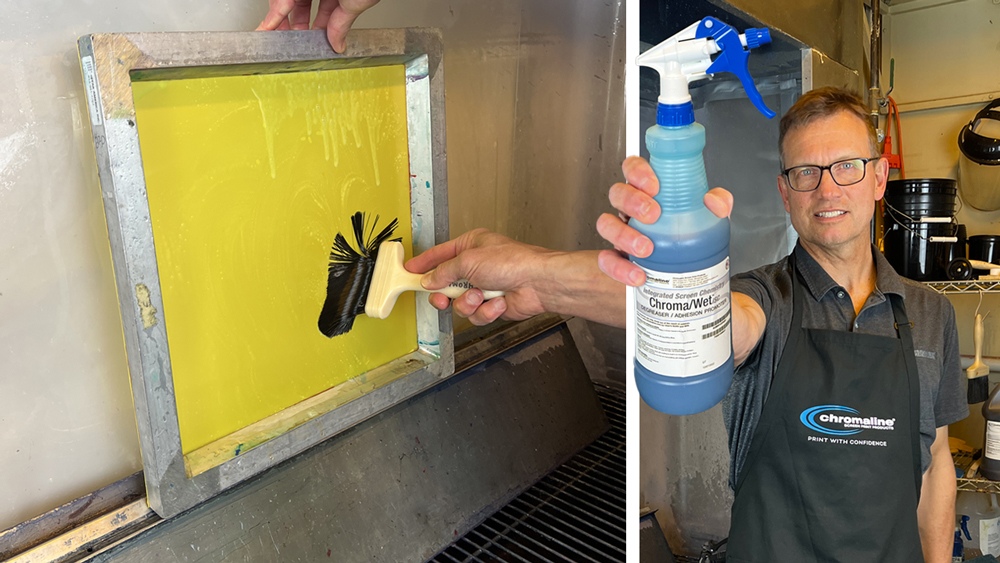
- Using a dedicated nylon bristle brush, gently scrub both sides of the mesh according to the degreaser instructions.
- Rinse both sides thoroughly with clean water and allow the screen to dry completely in a clean environment.
>> WATCH VIDEO: Screen Making 101: Degrease Your Screen
Pro Tip: Once the screen has been degreased, avoid touching the mesh with your hands. Skin oils can contaminate the mesh and interfere with stencil adhesion. Store the screen in a clean, dry environment until you are ready to coat it.
What Type of Brush Should You Use?
A nylon or all-plastic bristle brush is an excellent choice for degreasing screens. Avoid brushes containing metal components that can rust over time.
Keep a dedicated brush specifically for degreasing and rinse it thoroughly before use to prevent contamination from other screen-room chemicals.
Avoid woven or fibrous scrub pads that can shed material into the mesh. Loose fibers can become trapped in the screen and may contribute to pinholes, weak areas or loss of fine detail in the finished stencil.
Which Chromaline Degreaser Should You Use?
Chromaline offers three degreasers in the Integrated Screen Chemistry line. The best choice depends on your screen room and reclaiming process.
Chroma/Wet™ iSC
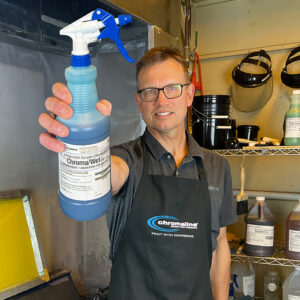
Chroma/Wet iSC is a powerful detergent, degreaser and adhesion promoter designed to restore mesh after reclaiming. It helps eliminate fisheyes and streaks during coating while promoting adhesion for both emulsion and capillary film stencils.
It is an excellent general-purpose choice for manual screen preparation and is Chromaline’s most popular degreaser.
Degreaser LF iSC
Degreaser LF iSC is a concentrated, low-foaming wetting agent and degreaser. Its low-foam formulation makes it especially well suited for automated screen cleaning and reclaiming equipment.
Like Chroma/Wet, it helps eliminate fisheyes and streaks while promoting stencil adhesion, resolution and screen life.
Degreaser 260 iSC
Degreaser 260 iSC is a concentrated, multi-purpose product that combines degreasing, ink degrading and dehazing capabilities.
Its water-based, non-caustic formula can be used to remove oils and residue from new or reclaimed mesh, emulsify several common screen printing inks before reclaiming, and help reduce ink haze and ghost images.
Better Screen Preparation Starts with Clean Mesh
Degreasing may be a simple step, but it plays an important role in producing consistent, durable screens. Starting with properly cleaned mesh gives your emulsion or capillary film the best possible surface for adhesion and helps reduce avoidable problems later in production.
Explore Chromaline’s Integrated Screen Chemistry products to find the right degreaser and screen-room chemistry for your process, or contact Chromaline if you need help selecting the best option for your application.